Got this from Citizens at City Hall:
"CATCH News – February 19, 2007
Rural cycling and walking trails strenuously opposed by Mitchell
A proposal to use rural hydro corridors as cycling and walking trails was forced off the table today by Glanbrook councillor Dave Mitchell. The move could eliminate up to half of the new multi-use trails called for in the city’s transportation master plan.
“There’s no way I want people riding their bikes or just thinking they can free willy walk across there,” declared Mitchell. “I can’t take my skidoo or ATV on their front lawn and rip the hell out of it, so I don’t want them walking across farmland either.”
The expanded trail network is intended to meet a target in the plan of “increasing the share of daily trips that are made by cycling or walking from the current level of 6% to 15% by 2030” by providing safe routes and promoting active transportation.
The plan presented to public works committee today promises 143 kilometres of new multi-use trails, with over 70 kilometres earmarked for hydro corridors.
But it enraged Mitchell who said he had previously told staff to remove them and had been promised that would happen.
“You cannot dictate to the agricultural community that in 2031 or whenever it is that you’re going to have paths going through the middle of prime agricultural land,” Mitchell declared. “I asked for them to be taken out before. I am led to believe they got put back in by mistake, but they should not go out to the public with them in here because it’s hugely misleading.”
Director of capital works, Gerry Davis, agreed that they were “supposed to be deleted” and promised to ensure that happened before the plan is released for a 30 day public comment period required by the environmental assessment process. However, further questioning by committee chair Margaret McCarthy revealed that the trail proposals have been before the public for several months.
“It’s out there in draft from the public meetings in September,” confirmed Davis.
To fulfill the requirements of the class environmental assessment process, the amended transportation master plan will now be released for a 30-day public comment period.
_______________________________________________________________________________
CATCH (Citizens at City Hall) updates use transcripts and/or public documents to highlight information about Hamilton civic affairs that is not generally available in the mass media. Detailed reports of City Hall meetings can be reviewed at www.hamiltoncatch.org. You can receive all CATCH free updates by sending an email to info@HamiltonCATCH.org.
[end]
NOTE - This is the same councillor who blamed environmentalists for causing damage in Red Hill Valley by walking on trails - while he supported the building of the red hill creek expressway.
-r
Tuesday, February 20, 2007

Thursday, February 01, 2007
Following Up and Holding...
Dear Karen:
Thank you for acknowledging my e-mail of January 15 on behalf of TLC and for updating us about various traffic issues at McMaster and Westdale.
TLC members look forward to your thorough consideration and relevant reply regarding the two related serious safety issues we raised in our e-mail of January 15.
Briefly, we are concerned that a large proportion of vehicles entering through the Main St. entrance do not stop at the "welcome booth", thus putting pedestrians and cars in conflict, and request that changes be made to ensure legitimate use of that entrance. Our preferred solution is the construction of bars operated by the staff at the booth.
Additionally, we are alarmed by proposals calling for eliminating the staffing of the staffing of the booths at the campus entrances. Please see our January 15 e-mail immediately below.
We look forward to hearing from you.
Dr. James S. Quinn
Friday, January 19, 2007
Reply, in the Main, misses the Concern
Jim,
Thank you for your email.
You should be aware that the local councilor Brian McHattie and the neighborhood in Westdale have applied significant pressure on the University with respect to traffic and they have forced us to take construction traffic and service vehicles through campus. There have been a lot of meetings with Hamilton Police Services and the local politician and the University has been forced to do this.
Basically the neighbours want all of our traffic of their streets and sent through the centre core of our pedestrian campus - this is a real challenge that we are facing right now.
Things could get worse - I wish I had better news. We have been juggling zoning and planning issues, by law issues, ticketing by HPS and so on.
We are continuing to work with the city to try to find a workable solution.
On the plus side we were successful with our negotiations with GO transit to install a transit terminal on the west side of main campus - behind the clarke centre - this has resulted in all GO buses coming off the campus to the periphery - it should open later this month - and there is a drop off area in that location as well.
We are also close to completion of our plans for the College Cres/Cootes entrance to improve pedestrian safety . A number of new initiatives are coming from this.
Long discussions with the city - again.
Karen Belaire
Main (Entrance) Concern
Karen Belaire, VP Administration, McMaster University
Dear Karen:
I am writing on behalf of Transportation for Liveable Communities (TLC), a working group of McMaster’s chapter of OPIRG (Ontario Public Research Interest Group).
TLC members have been pleased to see some major improvements to pedestrian safety on campus, most notably, the additional pedestrian zebra-crossings.
We are, however, displeased to note that, a year and a half after our letter to Dr. George, and your reply to us (attached), the necessary major safety improvements have not been implemented and there are even hints of proposed changes that would actually DECREASE pedestrian safety on campus.
In spite of your explicit promises in your letter of August 22, 2005, there is little control over entry of vehicles via the Main St. entrance. In a few sample periods taken by TLC members, the majority of cars passed through without checking in with the attendant. Many of these cars also kept driving through the two stop signs at the intersections in front of the Psychology Building. We find this unacceptable and believe that the only sustainable solution is to erect stop signs AND bars at the welcome booth, which would allow only controlled entry to campus. Bars should also be installed at the two other entrances to campus at Sterling St. and Cootes Dr. This may be combined with the proposed change to electronically controlled entry to the parking lots.
We should also note that, as far as we know, your promise of August 22, 2005 to implement a safe passenger drop off location has not been materialized. Not unexpectedly, significant dangerous traffic on campus currently consists of cars racing through heavy pedestrian areas and even manoeuvring outrageous U-turns in intersections crowded with pedestrians in order to drop off a passenger and then leave as fast as possible.
Finally, TLC has again heard that your reinstated promise of August 22, 2005 for a regularly staffed 'welcome booth' may not materialise, and that McMaster’s Security and Parking Services intend to modernize parking technology and eliminate the staffed booths at the campus entrances. We certainly encourage the introduction of new technology, but request that such technology would be designed to increase rather than compromise pedestrian safety on campus. For example, the use of beacons and bars at entrances could be used to eliminate all but service and emergency vehicles on certain roads, and entry to parking lots only to cars with proper permits.
Regardless of changes to parking control, we think that the welcome booth at the front entrance must be staffed as promised to us on several occasions. We also urge you to promptly implement the old promises regarding limiting car entry to campus only to the bare minimum through proper measures such as the ones outlined above.
We look forward to hearing from you,
Sincerely yours,
Jim
James S. Quinn, Ph.D.
For Transportation for Liveable Communities.
Dr. James S. Quinn Professor Biology Department McMaster University Hamilton, ON L8S 4K1 (905) 525-9140 ext 23194 quinn@mcmaster.ca http://www.science.mcmaster.ca/biology/faculty/quinn/quinn.htm
Thursday, December 21, 2006
A tale of two cities?
Hi Randy,Yes, there will be a bike lane through the underpass.Rick-----Original Message-----
From: randy opirg [mailto:randy@opirg.org]
Sent: Thursday, December 21, 2006 10:12 AM
To: Craven, Rick
Cc: D'Amelio, Carol; Dennison, Jack; Fitzpatrick, Rosemary; Jackson, Cam; Taylor, John; Thoem, Peter; Rudy, Jo-Anne; g-tlc@mcmaster.ca
Subject: King RoadDear Rick,When work proceeds for the rail underpass on King Road, are there plans to include a safe cycling passage? I have used that route before to get between the North Service Road bicycle lanes and the bicycle route on Plains (and the excellent bike lanes on King Road south of there). King Road would make a great connecting link for cyclists on what is now a fairly dangerous stretch. Bicycle lanes would be a welcome enhancement.I encourage Burlington to continue the good work you have embarked upon supporting sustainable transportation.Any news about plans for a safe cycling link along King Road would be much appreciated,Thanks for your time,Randy Kaycc councilcity cycling committeetransportation for liveable communities
Why does it seem to be so much easier to get cycling infrastructure in Burlington, compared to Hamilton? NOTE: Rick Craven is the ward councillor in Burlington, Ontario.
Tuesday, December 19, 2006
Governor's Reply
From: Powers, Russ < russ.powers@hamilton.ca>
Date: Dec 18, 2006 1:08 PM
Subject: RE: School Zone Safety on Governors Road
To: TLC <tlchamilton@gmail.com>
Date: Dec 18, 2006 1:08 PM
Subject: RE: School Zone Safety on Governors Road
To: TLC <tlchamilton@gmail.com>
Your issues are noted and will be considered as the process moves forward.
- - - -
(read TLC's Letter to Councillor Powers)
- - - -
(read TLC's Letter to Councillor Powers)
Sunday, December 17, 2006
Governing Governor's

g-tlc@mcmaster.ca
905-525-9140 ext. 26026
Monday, December 18, 2006
Dear Councillor Powers,
Transportation for Liveable Communities (TLC) is a working group of the Ontario Public Interest Research Group (OPIRG) McMaster. TLC works to achieve balanced sustainable transportation solutions in the city of
We are writing to draw attention to the traffic situation on Governor’s Road in
With the new Dundas West elementary school under construction on Governors Road at Bridlewood, there will be three schools (including Highland Secondary School and St. Bernadette’s elementary school) on this short stretch of highway (less than 1km).
The statement of a problem can make all the difference when seeking solutions. TLC is concerned that a solution you offered on your web site during the recent election campaign begins with the assumption that “traffic flow” is the problem on Governor’s Road, and offers road widening as a solution.
TLC feels that this is the wrong assumption and a desperately wrong conclusion.
The problem, as we see it, is traffic flows all too well the majority of the time on Governor’s, and that the speed of that flow puts school children and other pedestrians, cyclists and drivers at risk.
As you are likely aware there is a direct correlation between traffic speed and pedestrian fatalities:

Fig. 1 U.K. Department of Transportation, 1987. Killing Speed and Saving Lives, London, UK DOT.
Generally the only time traffic slows down on Governors is during “rush” hours, when the presence of too many single occupancy vehicles all going in the same direction at the same time creates a situation that is, from a pedestrian and cycling point of view, actually safer in terms of collision impacts. We should be aiming for a 30km/h maximum speed limit in the school zone.
TLC would thus prefer to pose the question: “what measures can be employed to create a safe and healthy environment for children using active methods of getting to school (i.e. cycling, walking) and to engineer a safer roadside environment for area residents outside of school hours?”
The City of
“Concerns about health and pedestrian safety among our children and air quality issues are prompting us to rethink the way we choose to get around in our communities,” said Sue Connell, Public Health Nurse with the City of
newsandpublications/newsreleases/ 2005news/september/05-09-30.htm
Road widening would only allow for increased vehicle speeds and make crossings more dangerous than the current situation, and run counter to the goals of the Transportation Master Plan currently under consideration by the city, and the goals outlined in Vision 2020:
Road widening would only allow for increased vehicle speeds and make crossings more dangerous than the current situation, and run counter to the goals of the Transportation Master Plan currently under consideration by the city, and the goals outlined in Vision 2020:
- To develop an integrated sustainable transportation system for people, goods and services which is environmentally friendly, affordable, efficient, convenient, safe and accessible.
- To encourage a shift in personal lifestyle and behaviour towards transportation choices that enhance personal health and fitness, save money, and have the lowest environmental cost.
It is imperative that we get the necessary improvements in place as opportunity presents itself. And it is important that proper engineering is applied to ensure safe outcomes.
When slowing or ‘calming’ traffic, the right design invites the right driver response. The guiding principle of traffic calming is to influence motorist speeds and behavior through good design whenever possible, rather than by traffic control measures such as traffic signals and STOP signs.
There are many design and engineering tools that can be used to slow down traffic and make it safer for children to walk and bicycle to school including;Source: http://www.saferoutesinfo.org/guide/engineering/slowing_down_traffic.cfm
- Narrow lanes
- Chokers and chicanes
- Speed humps
- Raised pedestrian crosswalks
- Neighborhood traffic circles
- Reduced corner radiiSpeed sensitive signals
Proper consideration must be given to effective traffic calming design if we are to be supportive of active modes of transportation like walking and cycling. Lane narrowing, the addition of bicycle lanes, wider sidewalks, a traffic median, a pedestrian crossing are all potential treatments that could enhance the safety of the school zone.
Surely the concentration of schools on this dangerous roadway makes safety considerations a priority for the city to address in a timely fashion.
TLC is happy to assist by being part of a public process that effectively deals with the worthy goals of providing safe and active routes to school, and improved cycling and walking facilities for area residents.
TLC would appreciate your prompt response and an outline/timeline of the next steps you intend to take.
We look forward to hearing from you in the near future.
Randy Kay
For Transportation for Liveable Communities
Tuesday, November 21, 2006
TLC Meeting this week
Thursday, November 23, 5:30pm TRANSPORTATION FOR LIVEABLE COMMUNITIES WORKING GROUP MEETING (open to all) - University Hall (UH) room B116
suggested agenda items:
- New Mayor and Council - let's see how we can make progress with them
- How best to move TLC's issues forward
- what are we working on?
- what should we be working on?
Projects (new and ongoing) Feel free to bring others
- Car Free Cootes Sunday Road Closure (Sept. 2007)
- Hatt Street Bike Lanes
- Victoria Park Bike Path
- Bike Racks on Buses
- MIC/Longwood/Kirkendall Traffic
- Governors Road safety (new school)
- Paved Shoulders
- North End Traffic Study
- Pedestrian Charter (City)
- Cootes Crossing*
- McMaster Front Entrance*
- Valley Inn Road
- York Bike Lanes
(*indicated McMaster Pedestrian/Cyclist Safety committee)
I propose we end the night with Nachos and a pitcher or two at the Phoenix, with TLC buying. (subject to group approval)
Thursday, November 09, 2006
Workshop with Dan Burden of Walkable Communities
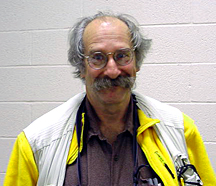
The City of Hamilton is conducting a Pedestrian Workshop to assist in the implementation of a new Transportation Master Plan for the City. Designed to guide Hamilton’s transportation network over the next 30 years, the Master Plan focuses on a balanced transportation network with transportation service for all users – pedestrians, cyclists, transit, vehicles and goods movement. The Pedestrian Workshop is designed to begin the discussion on urban change with an aim to preserve Hamilton’s unique physical and cultural attributes and strengthen the vitality and accessibility of the community.
The purpose of the Hamilton Pedestrian Workshop is to identify potential community improvement projects and initiatives, and to outline next steps in achieving a more walkable city, including moving towards establishing a pedestrian charter committee. To this end, the City of Hamilton has retained Mr. Dan Burden, the Director of Walkable Communities, as the workshop’s keynote speaker. Dan’s philosophy embraces “walkability as the cornerstone and key to an urban area's efficient ground transportation… leading to conserving resources (both natural and economic) and increased social interaction.” Dan’s presentation is intended to stimulate rich community input, feedback and participation.
You are invited to attend our Pedestrian Workshop. The workshop will have two connected segments: The first segment (3:00-5:30) will define participants’ shared pedestrian vision and values; and the second segment (7:00-9:30) will identify priority projects that would realize the identified vision and values. Dinner will be provided during the time between the two segments (from 5:30-7:00). Please RSVP for the event with Donnett Riley, City of Hamilton, at (905) 546-2424, x2383. We ask that you indicate if you will attend the afternoon session, the evening session (or both) as well as whether you will join us for dinner.
Details are as follows:
Date: Monday, November 20, 2006
Locations: Hamilton Convention Centre
1 Summers LaneHamilton, Ontario
Time: 3:00 pm to 9:30 pm
The consultant team will have on hand maps of Hamilton. Participants are encouraged to bring any materials which they would like the project team to have, or which represent ideas or concepts they wish to convey.
Should you have any questions or comments, please feel free to contact:
Mary Lou Tanner, MCIP, RPP Manager
Strategic & Environment Planning
Capital Planning & Implementation Division
Public Works Department
City of Hamilton
Phone: 905-546-2424, x5101
mtanner@hamilton.ca
Susan Mintz, Project Manager
Urban Strategies, Inc.
197 Spadina Avenue, Suite 600
Toronto, Ontario
M5t 2C8
Phone: 416-340-9004 x212
smintz@urbanstrategies.com
We hope that you will participate in this important event. We look forward to working together on this exciting project and thank you for your cooperation and assistance.
Sincerely,
Mary Lou Tanner, MCIP, RPP
Manager, Strategic and Environmental Planning
The purpose of the Hamilton Pedestrian Workshop is to identify potential community improvement projects and initiatives, and to outline next steps in achieving a more walkable city, including moving towards establishing a pedestrian charter committee. To this end, the City of Hamilton has retained Mr. Dan Burden, the Director of Walkable Communities, as the workshop’s keynote speaker. Dan’s philosophy embraces “walkability as the cornerstone and key to an urban area's efficient ground transportation… leading to conserving resources (both natural and economic) and increased social interaction.” Dan’s presentation is intended to stimulate rich community input, feedback and participation.
You are invited to attend our Pedestrian Workshop. The workshop will have two connected segments: The first segment (3:00-5:30) will define participants’ shared pedestrian vision and values; and the second segment (7:00-9:30) will identify priority projects that would realize the identified vision and values. Dinner will be provided during the time between the two segments (from 5:30-7:00). Please RSVP for the event with Donnett Riley, City of Hamilton, at (905) 546-2424, x2383. We ask that you indicate if you will attend the afternoon session, the evening session (or both) as well as whether you will join us for dinner.
Details are as follows:
Date: Monday, November 20, 2006
Locations: Hamilton Convention Centre
1 Summers LaneHamilton, Ontario
Time: 3:00 pm to 9:30 pm
The consultant team will have on hand maps of Hamilton. Participants are encouraged to bring any materials which they would like the project team to have, or which represent ideas or concepts they wish to convey.
Should you have any questions or comments, please feel free to contact:
Mary Lou Tanner, MCIP, RPP Manager
Strategic & Environment Planning
Capital Planning & Implementation Division
Public Works Department
City of Hamilton
Phone: 905-546-2424, x5101
mtanner@hamilton.ca
Susan Mintz, Project Manager
Urban Strategies, Inc.
197 Spadina Avenue, Suite 600
Toronto, Ontario
M5t 2C8
Phone: 416-340-9004 x212
smintz@urbanstrategies.com
We hope that you will participate in this important event. We look forward to working together on this exciting project and thank you for your cooperation and assistance.
Sincerely,
Mary Lou Tanner, MCIP, RPP
Manager, Strategic and Environmental Planning
Monday, November 06, 2006
rack one up? we'll $ee
Monday November 6, 2006
Good morning, you will be pleased to hear that Council has directed that staff submit a request for Capital funding for bike racks on the buses for their consideration during their 2007 budget deliberations, expected to begin early in the new year.
Don Hull
Director, Transit Division
Public Works Department
City of Hamilton
Rack It Up
Monday, November 6, 2006
Don Hull, Director of Transit, Hamilton Street Railway
Dear Don,
Given Burlington Transit’s adoption of bike racks on all their fleet of buses during the summer, Transportation for Liveable Communities urgently requests that the HSR come up with a definite plan for the introduction of bike racks on their buses.
These racks have been highly successful in other cities in Ontario including Toronto, Ottawa, Kitchener and now Burlington and we feel strongly that Hamilton should not be left behind. For one, Hamilton’s geography makes these racks a necessity. As the majority of our membership is composed of cyclists, we know that the Mountain can be a formidable barrier to cycling in our city; in this way Hamilton is different from many other cities. Most average cyclists would rather not race down or up the Mountain in competition with motor vehicles but would prefer a safer and more convenient option. In the absence of a dedicated, quick and efficient cycling access to the Mountain this affordable option should be provided.
As Director of Transit, you understand very clearly the impact of an over emphasis on private vehicles on our roads. Each year Hamilton experiences more and more smog days, the rate of asthma and other breathing conditions amongst children is now 1 in 5 and the menace of climate change continues to grow with each passing year; not to mention the fact that more and more Hamiltonians lead sedentary and inactive lives leaving them vulnerable to obesity and other related diseases. Every effort should be made to make cycling and public transit more attractive to Hamiltonians to combat these many negative trends.
Our group exists to make Hamilton a truly liveable community. We know that private vehicles receive much too much attention to the detriment of transit, cycling and walking. Bus racks on the HSR is the next step in making Hamilton a more cycling-friendly and sustainable city, not to mention growing the ridership of the HSR.
Therefore the Transportation for Liveable Communities formally requests a firm timeline for the proposed introduction of these racks on HSR buses. According to past HSR reports to TLC bike racks have been under consideration since 2001. Despite some reasonable concerns, five years is a long time to wait. We hope to not be still waiting for bike racks five years from now. Please don’t stall this important improvement any longer. Hamilton is already too far behind its neighbours.
We are at your disposal to facilitate and advertise this improvement in Hamilton’s cycling infrastructure.
Sincerely,
Ted Mitchell, MD
for Transportation for Liveable Communities
Cc: Mayor, City Council, Scott Stewart, Dr Elizabeth Richardson Medical Officer of Health
- - - - -
About TLC:
Transportation for Liveable Communities is a volunteer working group of the Ontario Public Interest Research Group based at McMaster University. TLC works to improve conditions that support sustainable transportation, including walking, cycling, public transit and car-pooling.
Tuesday, October 31, 2006
University Avenue: University Response
Dear Randy,
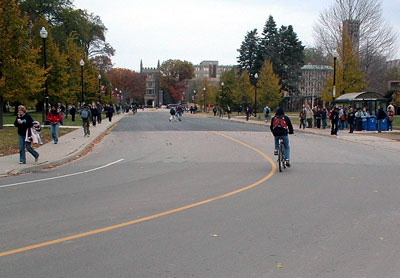
McMaster University each year repairs our roads and sidewalks to provide a safe environment for our University community. This program is managed by our Physical Plant through a plan and budget prepared by Parking Services.
You may recall the poor condition that University Ave was, particularly in the area of the bus stops. In some spots the road bed was exposed through the asphalt making it quite unsafe.
The plan for University Avenue rehabilitation called for road bed reconstruction and patching. Unfortunately when opening the road for repairs the contractors found areas where a partial concrete roadbed existed. This concrete base was collecting water and had led to the premature aging of the existing road. Without its removal any repair conducted would have led to the same premature aging and cracking. Therefore the project's scope of work was adjusted and the concrete slabs removed and weeping tile drainage added.
This project has a good appreciation of the future plans and McMaster's desire to make the area sensitive to pedestrians and bicycle riders. The work that was just completed in rebuilding the road will mean that next year's project to continue the pedestrian focused campus plan will not have to do this basic work before proceeding, resulting in a significant dollar savings.
As well, awaiting the next phase of the University Ave project to begin, our Parking Services will be doing the following
McMaster University each year repairs our roads and sidewalks to provide a safe environment for our University community. This program is managed by our Physical Plant through a plan and budget prepared by Parking Services.
You may recall the poor condition that University Ave was, particularly in the area of the bus stops. In some spots the road bed was exposed through the asphalt making it quite unsafe.
The plan for University Avenue rehabilitation called for road bed reconstruction and patching. Unfortunately when opening the road for repairs the contractors found areas where a partial concrete roadbed existed. This concrete base was collecting water and had led to the premature aging of the existing road. Without its removal any repair conducted would have led to the same premature aging and cracking. Therefore the project's scope of work was adjusted and the concrete slabs removed and weeping tile drainage added.
This project has a good appreciation of the future plans and McMaster's desire to make the area sensitive to pedestrians and bicycle riders. The work that was just completed in rebuilding the road will mean that next year's project to continue the pedestrian focused campus plan will not have to do this basic work before proceeding, resulting in a significant dollar savings.
As well, awaiting the next phase of the University Ave project to begin, our Parking Services will be doing the following
* painting a wide island down the middle of the road from Sterling to College Crescent
* painting a highly visible crosswalk in the mid point of University that lines up with the primary crossing from Engineering to MDCL
* construction of a permanent island (plants etc., in middle) on Scholars Lane for a distance of about 100 metres. ONLY emergency vehicles and service vehicles providing services to buildings in Scholars Lane will be granted access.
These are some of the projects that we have been undertaking to ensure the safety of our McMaster Community and our mission to contribute to pedestrian safety in the University Core.
You might wish to contact Terry Sullivan, at Security and Parking for any additional information. (23372)
Yours sincerely,
Peter George
Monday, October 30, 2006
University Avenue
October 29, 2006
Dr. Peter George President, McMaster University
Dear Dr. George,
RE: Disregard to pedestrian safety and Campus Plan.
I am writing on behalf of "Transportation for Liveable Communities" (TLC), a working group of the Ontario Public Interest Research Group (OPIRG), McMaster.
Members of TLC were surprised to learn that the current construction on University Avenue does not include the explicit plans outlined in section 7.1.9 of the Campus Plan and illustrated in the attached Figure 7-A5.
It is very unfortunate that McMaster is investing large sums of money on University Ave. while disregarding its official plan and its official commitment for a ‘pedestrian-focused campus’.
We find this short sighted and wasteful and thus request that adjustments to the construction plans be made to fulfill commitments laid out in McMaster's official plan: i.e. reduction of the vehicular lanes to 3.5 m each, creating bicycle lanes and widening the sidewalks. These are positive steps to ensure pedestrian safety in this area. Yet what we are confronted with are wide, smoothly paved lanes on University Avenue, which effectively invites drivers to speed faster on this road section, significantly increasing the threat to pedestrian safety.
On another issue, TLC welcomes the addition of a rudimentary GO bus terminal on campus. We are troubled, however, that construction of additional parking spaces in zone 3NX is not accompanied with the desperately needed re-design of the nearby intersection at College Crescent. We are aware of plans to improve this intersection and are very concerned that this work is not being done in conjunction with the GO terminal construction.
The risk is that vehicular traffic through that intersection will be increased, with no simultaneous improvement for pedestrian and cyclists.
We wish to strongly encourage McMaster University to take steps now to support explicit commitments for a “pedestrian-focused campus that is accessible and user friendly for all users”. Although we understand the financial concerns, we find it unacceptable that expensive traffic-related construction will do little or nothing to make the campus safer for pedestrians and cyclists.
We look forward to hearing how our serious concerns will be dealt with within the ongoing projects discussed above.
Sincerely,
Randy Kay (for TLC)
tlchamilton.org
905-525-9140 ext. 26026
Dr. Peter George President, McMaster University
Dear Dr. George,
RE: Disregard to pedestrian safety and Campus Plan.
I am writing on behalf of "Transportation for Liveable Communities" (TLC), a working group of the Ontario Public Interest Research Group (OPIRG), McMaster.
Members of TLC were surprised to learn that the current construction on University Avenue does not include the explicit plans outlined in section 7.1.9 of the Campus Plan and illustrated in the attached Figure 7-A5.
It is very unfortunate that McMaster is investing large sums of money on University Ave. while disregarding its official plan and its official commitment for a ‘pedestrian-focused campus’.
We find this short sighted and wasteful and thus request that adjustments to the construction plans be made to fulfill commitments laid out in McMaster's official plan: i.e. reduction of the vehicular lanes to 3.5 m each, creating bicycle lanes and widening the sidewalks. These are positive steps to ensure pedestrian safety in this area. Yet what we are confronted with are wide, smoothly paved lanes on University Avenue, which effectively invites drivers to speed faster on this road section, significantly increasing the threat to pedestrian safety.
On another issue, TLC welcomes the addition of a rudimentary GO bus terminal on campus. We are troubled, however, that construction of additional parking spaces in zone 3NX is not accompanied with the desperately needed re-design of the nearby intersection at College Crescent. We are aware of plans to improve this intersection and are very concerned that this work is not being done in conjunction with the GO terminal construction.
The risk is that vehicular traffic through that intersection will be increased, with no simultaneous improvement for pedestrian and cyclists.
We wish to strongly encourage McMaster University to take steps now to support explicit commitments for a “pedestrian-focused campus that is accessible and user friendly for all users”. Although we understand the financial concerns, we find it unacceptable that expensive traffic-related construction will do little or nothing to make the campus safer for pedestrians and cyclists.
We look forward to hearing how our serious concerns will be dealt with within the ongoing projects discussed above.
Sincerely,
Randy Kay (for TLC)
tlchamilton.org
905-525-9140 ext. 26026
Sunday, October 29, 2006
Reacting to events
Often TLC is forced to respond to situations not of our making. This past week we have responded to two negative developments:
- One, McMaster University sails through a paving job on campus with no regard to (their own) official plan to make the campus more pedestrian friendly.
- On a much more tragic note, the other situation involved the death of a cyclist, and a friend, John Korten, on Monday, October 23, 2006. He was killed when a motor vehicle struck him on Dundas Street in Burlington, Ontario. Police are still investigating.
As sustainable transportation advocates, we refuse to let these incidents pass without corrective action. We often start with a letter.
Friday, October 27, 2006
Gary Crowell, Chief, Halton Regional Police Service
Transportation for Liveable Communities is a volunteer working group of the Ontario Public Interest Research Group based at McMaster University. TLC works to improve conditions that support sustainable transportation, including walking, cycling, public transit and car-pooling.
We are writing in response to media articles on the death of a cyclist (John Korten) who was hit and killed by a motor vehicle on Dundas Street in Burlington the morning of Monday, October 23, 2006.
Cycling needs to be encouraged as a cheap, clean, healthy and effecient mode of transportation. Yet, too often in our members' experience, drivers do not always take proper care, and indeed a minority at times drive recklessly and in a threatening manner dangerous to the well-being of cyclist and other road users.
The police have a very important role to play in ensuring that road safety is adhered to through enforcement, education and through investigations and laying of charges.
We hope to work with the area Police Services to ensure that cyclists receive due respect when it comes to investigating fatalities like this. There is, unfortunately, a perception that running over cyclists too often does not result in charges; this, if it were the case, would of course send a dangerous message both to drivers and potential cyclists.
Questions in the minds of our members basically come down to these two: If the victim in this case, a father of three young children, is run down from behind, does that not indicate the driver of the motor vehicle was not operating it in a safe manner? If the victim were in a motor vehicle, would the process of laying charges be any different?
We do not mean to imply that the police are not doing everything possible to respect the rights of the victim; we only want assurance that in bicycle/vehicle collisions a full investigation take place that in no way marginalizes the seriousness of the tragic event simply because the victim was riding a bicycle.
TLC would appreciate any news of developments in the investigation.
Respectfully yours,
Randy Kay
for Transportation for Liveable Communities
cc Chief Brian Mullan, Hamilton Police Service
TLC
Tuesday, September 26, 2006
Hire Some Cycling Staff!
September 20, 2006
E-Mailed to Ed Switenky ; Ron Gallo ; Hart Solomon and copied to Hamilton City Council
Transportation for Liveable Communities would like to take this opportunity to draw attention to an ongoing problem.
The issue is a follows:
In the meantime, TLC would appreciate being kept informed about changes to city cycling staff so that we can communicate our concerns and ideas directly.
For TLC,
Randy Kay www.tlchamilton.org
E-Mailed to Ed Switenky ; Ron Gallo ; Hart Solomon and copied to Hamilton City Council
Transportation for Liveable Communities would like to take this opportunity to draw attention to an ongoing problem.
The issue is a follows:
- The city cycling staff keeps changing
- There is no notification that there is a change
- We don't know if the last person (Brian Applebee) was replaced and who the new contact is
- As a result, our inquiries go unanswered and
- it is extremely difficult to follow up on outstanding projects and issues.
"Create a senior staff level pedestrian and cycling coordinator position to monitor and assist in the implementation of the policies until such time that the policies are integrated into the everyday practises of the City administration." (Development of Policy Papers for Phase Two of the Transportation Master Plan for the City of Hamilton WALKING AND CYCLING POLICY PAPER)Transportation for Liveable Communities has been a leading stakeholder on bicycle issues in the city for several years, and has consistently sought to develop and maintain positive and cooperative relationships with city council and staff on alternative transporation issues. The failure to keep us informed sends a negative signal about the city's commitment to its cycling plan, and shows a lack of consideration towards an organization that has provided valuable information and support for the implementation of the city's cycling policies. This breakdown in communication around the change in cycling staff is emblematic of the need to develop our relationship on a new footing.
In the meantime, TLC would appreciate being kept informed about changes to city cycling staff so that we can communicate our concerns and ideas directly.
For TLC,
Randy Kay www.tlchamilton.org
Friday, September 22, 2006
OPIRG McMaster: RESEARCH AND ACTION: CAR FREE DAY street party w/rain
OPIRG McMaster: RESEARCH AND ACTION: CAR FREE DAY street party w/rain: "Rain kept car free day street party numbers down to about 50 people, and kept the musical performers inside the welcoming Sky Dragon Centre..."
Reports from Car Free Week 2006 available at the OPIRG McMaster blog. So it rained a bit, we still had fun!
Reports from Car Free Week 2006 available at the OPIRG McMaster blog. So it rained a bit, we still had fun!
CAR FREE WEEK 2006
CAR FREE WEEK 2006PARK IT: Transportation for Liveable Communities (TLC) celebrates alternatives to the private automobile with a week of car free events. 


Monday, S.18: Bus 'n hike 4pm to 7pm - grab the HSR bus to the local conservation area to visit a beautiful waterfall. Participants get free Waterfall and Bike Route maps. Meet at the bus stop near the McMaster Museum of Art 4pm sharp.
Tuesday, S.19:
Wednesday, S.20 IDLE FREE WESTDALE - 2pm, hand out mock idling tickets, meet at Global Village in Westdale (across from Tom Hortons)
Thursday, S.21: Bicycle/Pedestrian "Drive-IN" movie night at the Gage Park Bandshell. Free movies. Dusk
Friday, S.22:
Saturday, S.23
Sunday, S.24: Guided Nature Hike in Cootes Paradise nature sanctuary. 10am with Brian McHattie (ward 1 councillor). Meet in front of Union Market inside the McMaster Student Centre.
Sunday S. 24 - 1:00 to 3:00 pm SKETCH WALK: Join us on Sunday, September 24th as part of Car-Free Week for a two hour round-trip walk with sketching stops, info on local history and activities along the way. We'll meet at Mixed Media, 174 James St. N. at 1 pm and meander and stroll the streets of downtown Hamilton in search of things to sketch. It is free to participate and all our welcome to attend. Call Dave at Mixed Media for more info - 905-529-2323 . www.mixedmediahamilton.com
transportation for liveable communities - 6 years of car free celebrations!


- Women Only Bike Repair workshop at Recycle Cycles 6-9 pm, 19 Pearl Street North
- The Power of Community: How Cuba survived Peak Oil film night at Transit Gallery (230 Locke Street South)
- Walking School Bus (Dundas)
- Car Free on King William Critical Mass and street party. 5:30 pm meet in front of the Sky Dragon Centre for a critical mass bike ride followed by a street party with live music featuring Kim and Frank Koren, D-Lishus, Kelly Grrrl, and the Funk Ambassadors.
Friday, March 10, 2006
COOTES COMMITTEE
Committee formed to address Cootes Drive crossing
By Craig Campbell (Dundas Star)
News Staff (Mar 10, 2006)
A new committee has formed to find ways of improving pedestrian safety, after the death of 19-year-old Heather Watson, who was struck by a salter truck while attempting to cross Cootes Drive on Feb. 13.
Randy Kay, a Dundas resident and member of the Ontario Public Interest Research Group's transportation for liveable communities working group (TLC) , said last week's meeting was positive.
He said no one at the meeting suggested removing the six-month-old pedestrian controlled traffic light, where Heather was struck.
Police are still investigating and have not said whether or not the traffic light had been activated, or if the light had turned red before Ms. Watson attempted to cross. Police have not charged the truck driver.
"We're happy the light is there," Mr. Kay said. "We just need something to make it safer."
He said those attending the first meeting of the committee included: Ward 1 city councillor Brian McHattie, McMaster University planner Linda Axford, head of security and parking Terry Sullivan, and Ed Switenky of the city traffic department.
Also there were representatives of Hamilton Police, the McMaster Student Union's Alternative Community and Transportation, and Synectics - the traffic engineering consultants that studied the Cootes crossing two years ago and recommended the pedestrian controlled traffic light.
"Brian (McHattie) suggested this would be the first of several meetings," Mr. Kay said.
He said the city has deactivated a link between the pedestrian controlled traffic light and the nearby Main West/Cootes Drive/Leland Street traffic light.
"That was done to make it more responsive," Mr. Kay said. "And it does seem more responsive."
A regular user of the Cootes crossing, he noticed the light sometimes took at least 40 seconds to change while pedestrians waited. Often, there wasn't any traffic on Cootes at the time.
Mr. Kay thinks this may have helped form the habit of some pedestrians crossing immediately after pressing the button to activate the light - before it turned red to stop traffic, or crossing without activating the light at all.
He's not sure McMaster students are aware of the change and may continue crossing against the light.
Sgt. Glenn Jarvie of the Hamilton Police was unavailable for comment before deadline this week, but said last week several witness statements were being reviewed.
Police are to meet with regional coroner Dr. David Eden to review the circumstances of the collision that killed Heather Watson, and determine if there are any recommendations to improve safety.
Randy Kay and TLC wants the city to act on traffic calming measures recommended in the Synectics report.
Mr. Kay specifically mentioned increasing the width of the centre median on Cootes to narrow the lanes, flashing amber pedestrian lights, and replacing the current on-ramp access to Cootes from Main West with a right-turn lane.
TLC also supports a lane in each direction on Main West completely dedicated to transit, cabs and cyclists, speed reduction to 50 kilometres an hour, and improvements to the new McMaster entrance on Main West.
Monday, March 06, 2006
lots of opinions, little action
Police, coroner continue to investigate fatal collision on Cootes Drive
By Craig Campbell (Dundas Star)
News Staff (Mar 3, 2006)
Hamilton Police met with Heather Watson's family Tuesday to update them on the investigation of a collision that killed the 19-year-old McMaster University student as she tried to cross Cootes Drive on Feb. 13.
Sergeant Glenn Jarvie said investigators shared what information they could with Heather's family, but will not publicly release any details until the investigation is complete. Police have not yet concluded whether the six-month-old pedestrian-controlled traffic lights had been activated when the second-year student stepped onto the road just after 6 p.m.
"We are going to go over a few statements with witnesses to clarify parts," Sgt. Jarvie said.
An iPod found at the scene was to be taken to Toronto's centre for forensic science to see if it was in use and, if it was, its volume.
Though Sgt. Jarvie couldn't say if the pedestrian-controlled traffic light had been activated and if the traffic light was green or red, he did say no charges would be filed against the city salter truck driver who struck Heather.
That won't surprise Emile Therien, president of the Canada Safety Council.
When Mr. Therien heard about the accident this week, he immediately suggested a pedestrian probably pressed the button while in motion and continued to cross before the traffic light had turned yellow.
"That's the constant thing with these pedestrian controlled devices. They're not going to change at the time of activation,"
Mr. Therien noted the driver of the truck has not been charged, so it appears he is not at fault. Despite this case, Mr. Therien and the Canada Safety Council support pedestrian-activated traffic lights.
"They make a lot of sense," he said. "People should be aware the light is not going to change as soon as you press the button."
Crossing too early is just one of the problems Randy Kay of Transportation for Liveable Communities has noticed at the Cootes traffic lights. Two years ago, TLC wrote a letter to the City of Hamilton supporting a pedestrian and cyclist controlled traffic signal - and other measures - to improve safety at the uncontrolled crossing.
Mr. Kay said the McMaster-based organization planned to meet with Ward 1 councillor Brian McHattie and city traffic staff this week to discuss further safety measures at the crossing.
He said several recommendations in a consultant's report were not acted on.
The detailed traffic safety review completed by Synectics Inc. in 2004 contains traffic and pedestrian counts, speed data, conflict analysis and background.
The study recommends lane narrowing through pavement markings, landscape changes to the roadside to discourage speeding, fencing to prevent downstream pedestrian crossing, enhanced pedestrian safety and enforcement, and increased police speed enforcement.
In addition, 11 potential remedial measures to improve sight distances and enhance the crossing were listed in the report.
They included trimming overhanging foliage, adding reflective material, relocating signing, and placing the word stop on pavement approaches.
This was all recommended in addition to a mid-block pedestrian controlled traffic light.
"Did the city fully implement the recommendations to make it a proper crossing?" Mr. Kay said. "I think not."
He also questioned the timing of the traffic light, noting that many pedestrians over the past six months have reportedly pressed the button but crossed immediately, against the light.
"Traffic flow is given precedence over pedestrian wait time. The light takes so long to change, pedestrians just cross," Mr. Kay said.
The Ainslie Wood - Westdale Secondary Plan includes a policy on the crossing at Cootes and Sanders. It states improvements will be undertaken to facilitate crossing.
"This will include traffic calming, mainly in the form of pavement treatments, and management studies along Cootes Drive, north of Sanders Blvd.," the policy states.
Mr. Kay wants to talk to city staff about putting in some of those traffic calming measures. Both Mr. Kay and Mr. Therien prefer traffic lights to a pedestrian bridge - despite the fact there were no reported accidents in the 10 years before the lights were installed at the end of August.
"We talked about (a bridge crossing) before the lights came in. Pedestrians would probably bypass that," Mr. Kay said.
Mr. Therien said initial cost, and ongoing maintenance, are also problems with pedestrian bridges.
Jeff Suggett, senior research specialist at traffic safety engineering consultant Synectics, said a flashing crosswalk sign was not recommended because such controls have a mixed record.
He said the danger with crosswalks is pedestrians incorrectly assume they have the right of way. Some drivers could ignore the signal and drive through.
"If you are a driver, you're going to stop more readily for a traffic light," Mr. Suggett said.
He agreed a pedestrian bridge is very expensive and there is no guarantee pedestrians would use it.
Meanwhile, Mr. Suggett pointed out, pedestrian controlled traffic lights are becoming quite common.
Two of the pedestrian safety devices are planned for downtown Dundas. One will be installed at King Street West and Ogilvie, the other at King West and Foundry before the end of the year.
Jeff Gowland has lived in Dundas the past 10 years. He said he complained to councillor McHattie about the Cootes Drive crossing within a day of it being installed. Now he's telling Dundas councillor Art Samson the two Dundas lights are a mistake too.
"I told him the light was basically an accident waiting to happen," said Mr. Gowland, a communications operator with the Hamilton Police Service.
"Drivers become complacent. (Pedestrians) don't stop. Ninety per cent of the time you're stopped at a red light and no one's there - they've already crossed."
David Eden, the regional supervising coroner, said his office is investigating the accident that killed Heather Watson.
When police finish their investigation, they will meet with the investigating coroner and pathologist to establish the facts of the case, and see if any recommendations should be made.
"We are looking at the safety of pedestrians who are crossing this thoroughfare," Dr. Eden said. "We have not yet drawn any conclusions.
"We're still working on the facts. We need a good factual basis before making recommendations."
He said the coroner's office has a "fairly clear" idea of what happened, but still needs to answer several questions about the design of the crossing and flow of pedestrians and traffic.
Cootes Danger Designs
Friday, March 3, 2006
McMaster University has by far the highest concentration of pedestrians and cyclists in the city, yet the auto-centric infrastructure on Main Street West and Cootes Drive ignores this fact, posing serious barriers to their safe movement.
The recent tragedy on Cootes Drive only serves to highlight the ongoing conflict between cars and people walking and cycling in an environment where motor traffic dominates all other modes of transportation.
Transportation for Liveable Communities (TLC) is seeking structural changes to calm traffic on streets bordering McMaster University.
Speed is intimately linked to death, and speed is a recognized problem at McMaster. For instance: the report that preceded the installation of pedestrian lights on Cootes at Sanders Blvd where a 19- year-old McMaster student was struck and killed recommended a speed reduction strategy, noting that,
TLC would like to see the pedestrian crossing light more responsive to pedestrian needs by giving pedestrian priority (rather than traffic priority) to reduce wait times.
We also suggest replacing the current on-ramp from Main West with a right-turn lane at Cootes and Main, to discourage the "highway mentality" of drivers as they head north into the pedestrian crossing.
With regard to the recently re-engineered McMaster Front Entrance, TLC can only wonder why this was allowed to happen - and demand changes to allow safe crossing for cyclists and pedestrians.
Specifically, TLC wants the turning radius for cars decreased, the crosswalks aligned at the corner (rather than mid block) and the islands extended toward the centre of the intersection to allow safe and direct passage for pedestrians.
In order to calm traffic on Main Street West, a road entirely devoted to fast flowing traffic despite the presence of several schools, TLC advocates one lane in each direction be designated a "diamond lane" for the exclusive use of transit, cyclists and taxi-cabs; a reduced and enforced speed limit of 50 km/h; and adjustments to the traffic light synchronization to discourage speeding.
"The changes must be substantial to redress the current imbalance that marginalizes the thousands of people walking and cycling in this area," says TLC's David Cohen.
TLC representatives are meeting with City staff, ward one councillor Brian McHattie and others from the McMaster community Friday, March 3 to discuss these issues.
McMaster University has by far the highest concentration of pedestrians and cyclists in the city, yet the auto-centric infrastructure on Main Street West and Cootes Drive ignores this fact, posing serious barriers to their safe movement.
The recent tragedy on Cootes Drive only serves to highlight the ongoing conflict between cars and people walking and cycling in an environment where motor traffic dominates all other modes of transportation.
Transportation for Liveable Communities (TLC) is seeking structural changes to calm traffic on streets bordering McMaster University.
Speed is intimately linked to death, and speed is a recognized problem at McMaster. For instance: the report that preceded the installation of pedestrian lights on Cootes at Sanders Blvd where a 19- year-old McMaster student was struck and killed recommended a speed reduction strategy, noting that,
"Despite the presence of a posted 60 km/h speed limit, speed data recorded in the vicinity of the crosswalk indicates that vehicles significantly exceed the posted speed limits. The combination of excessive speed and the high pedestrian-bicycle crossing volume create a particularly hazardous situation." (Cootes Drive at Sanders Boulevard, Pedestrian and Cyclist Crossing Safety Review, City of Hamilton, Synectics Transportation Consultants Inc. October 2004 )TLC believes that structural changes are needed to calm traffic on Main West and Cootes drive. For Cootes we simply point to the unfulfilled recommendations that were to accompany installation of the pedestrian lights:
"To address excessive vehicle speeds on Cootes Drive:TLC strongly feels that lane narrowing (by increasing the width of the centre median) should be implemented both north and south of the pedestrian crossing to address the speed of approaching vehicles, as well as flashing amber lights indicating pedestrian crossing ahead.
- Provision of horizontal deflection, in the form of lane narrowing;
- Provide increased police speed enforcement or use of a speed trailer; and
- Changing the roadside environment to discourage high vehicle operating speeds."
(Synectics)
TLC would like to see the pedestrian crossing light more responsive to pedestrian needs by giving pedestrian priority (rather than traffic priority) to reduce wait times.
We also suggest replacing the current on-ramp from Main West with a right-turn lane at Cootes and Main, to discourage the "highway mentality" of drivers as they head north into the pedestrian crossing.
With regard to the recently re-engineered McMaster Front Entrance, TLC can only wonder why this was allowed to happen - and demand changes to allow safe crossing for cyclists and pedestrians.
Specifically, TLC wants the turning radius for cars decreased, the crosswalks aligned at the corner (rather than mid block) and the islands extended toward the centre of the intersection to allow safe and direct passage for pedestrians.
In order to calm traffic on Main Street West, a road entirely devoted to fast flowing traffic despite the presence of several schools, TLC advocates one lane in each direction be designated a "diamond lane" for the exclusive use of transit, cyclists and taxi-cabs; a reduced and enforced speed limit of 50 km/h; and adjustments to the traffic light synchronization to discourage speeding.
"The changes must be substantial to redress the current imbalance that marginalizes the thousands of people walking and cycling in this area," says TLC's David Cohen.
TLC representatives are meeting with City staff, ward one councillor Brian McHattie and others from the McMaster community Friday, March 3 to discuss these issues.
Saturday, March 04, 2006

Group studies fatal Mac crossing
Gary Yokoyama, the Hamilton Spectator
City staff will examine traffic speeds on Cootes Drive in the next months to see if there's still a problem.
Students continue to cross against red on Cootes Drive near campus
By Meredith Macleod, The Hamilton Spectator (Mar 4, 2006)As a group of city, police and university officials met yesterday to figure out how to make the Cootes Drive crossing into McMaster safer for pedestrians and cyclists, a fire truck blared its horn at a young woman who appeared about to step into its path at that very spot.
It was a frightening reminder of the accident that took 19-year-old Heather Watson's life just 19 days ago. The arts and science student was killed by a City of Hamilton truck as she walked home from school. Witnesses have said Watson was wearing headphones and that the truck honked before it hit her.
The accident is still under investigation.
An as-yet-unnamed committee is being formed to address pedestrian safety all around the campus. Called together by Ward 1 Councillor Brian McHattie, it met yesterday afternoon and has compiled close to 20 suggestions -- including lowering the speed limit, increased signage and peer safety education.
The first priority is Cootes Drive but Randy Kay, a volunteer with Transportation for Liveable Communities (TLC), says recent upgrades to the Main Street entrances to the campus are "an unmitigated disaster. Someone is going to get hit there too. It's just a matter of time."
TLC, which took part in yesterday's meeting, is calling for "traffic calming" measures on Main and Cootes. That could include fewer, narrower lanes, flashing amber lights, eliminating the ramp from Main onto Cootes and squaring up the intersection, says Kay.
He says the entire campus area has been built to best accommodate cars, even though it has the highest concentration of pedestrians in the city.
"There needs to be real, drastic changes there."
Yesterday, as a pile of frozen flowers rested by the road in tribute to Watson, a female student riding a bike and wearing large headphones crossed two lanes of traffic against the pedestrian light heading to campus from Sanders Boulevard when the fire truck blared its warning.
During a couple of hours of observation at the site where an estimated six people on foot and 18 cars cross paths each minute, about one-third of pedestrians crossed against the light.
That light was installed last year after a safety study determined speed and volume made it necessary.
Many pedestrians pushed the button to get the light to change but were too impatient to wait for it. They preferred to dash across during gaps in traffic. It's a dangerous dash.
It didn't take a radar gun to see that many vehicles were well above the 60 km/h permitted in the area.
It may seem that the fatal accident has had little effect on drivers and pedestrians, but several students said they have changed their ways.
Student Sherise Johnson no longer uses both earplugs on her MP3 player.
"The accident scared me."
Jimmy Sekhou, in his fourth year of commerce, says many students simply ignore the light but that Watson's death has made him more cautious.
He says the speed limit in the area should be reduced, especially coming out of Dundas.
"It's an open road all the way down there."
City staff will examine speeds on Cootes in the next couple of months to see if there continues to be a problem since the pedestrian light was installed.
Valley Inn Road renovation

Kaz Novak, the Hamilton Spectator
This military-style Bailey bridge is aging
and may be replaced by a pedestrian bridge that
would link Hamilton and Burlington waterfront trail.
City officials eye pedestrian route to replace decaying Bailey bridge
By Eric McGuinness, The Hamilton Spectator (Mar 4, 2006)This may be the last year to delight kids big and small by driving across the clattering timber deck of the Valley Inn Road bridge.
Hamilton officials want to silence the bay area's noisiest bridge, tear it out, close the roads on either side and put in a span just for cyclists and pedestrians.
Although it was once the main route between Dundas and Toronto, Valley Inn Road and its landmark bumpy bridge over Grindstone Creek now carry only 1,000 cars and small trucks a day.
Users are mainly sightseers, birdwatchers, fishers, kayakers and people going to and from the Royal Botanical Gardens' Laking Garden, Woodland Cemetery and Easterbrook's, locally famous for its foot-long hot dogs.
The new bridge would become part of a waterfront trail link between Hamilton and Burlington, which meet at that point.
The staff recommendation goes to Hamilton's public works, infrastructure and environment committee Monday. If the committee and council go along, an environmental assessment report on the project will be posted for public review for 30 days.
The present structure is a Bailey bridge, a military-style portable structure installed after the previous bridge collapsed beneath a heavy truck in 1964. It was rented from the province and was supposed to be temporary, but the city eventually bought it for $1 and continues to maintain it.
Engineers say the steel frame is corroding, underpinnings at either end are eroding and deck timbers the size of railway ties are decaying. They say the whole thing will last only three to five more years.
The environmental assessment, which included two public meetings, concludes that a new vehicular bridge would be too expensive and too damaging to the natural area at the creek mouth, described as "a sanctuary for both wildlife and humans wishing to escape the surrounding urban areas."
It's also the site of a barrier of Christmas trees built by the Royal Botanical Gardens to keep large carp from Hamilton Harbour out of a pike spawning area in Sunfish Pond upstream.
Sean Dillon, an Aldershot resident who was walking past a gaggle of geese, many ducks and a lone swan in the pond yesterday, said he welcomed the replacement plan.
"I think it would be a good idea as long as there's some way to cross here. I would not want to see it where we couldn't walk over."
Mike Zacjenko, organizer of the historic Around the Bay Road Race -- which will be run March 26 this year -- said runners would be fine with a three-metre-wide pedestrian bridge.
Werner Plessl, executive director of the Hamilton Waterfront Trust, which wants to extend Hamilton's Waterfront Trail across the High-Level Bridge and down Valley Inn Road to Burlington, said the new bridge would accommodate service vehicles and police cars.
But eight of 31 people who commented at the first public open house last June said they wanted to keep the road open to all drivers.
Planners say Valley Inn Road, named for a hotel that burned down in 1928, would dead end on the Hamilton side on high ground between York Boulevard and the CN Rail bridge. A turnaround and small parking lot would be built.
There are two options for the Burlington side.
The first is to close Spring Gardens Road above the creek valley and allow only limited vehicle access down toward the bridge and the one private home there.
The second would add a water-level parking lot at the bridge's east end and allow two-way traffic up and down the hill.
For further information, check Monday's public works committee agenda on the city website, www.hamilton.ca, or phone the city call centre at 905-546-CITY (2489).
Monday, February 27, 2006
Spelling it out at MIP
This letter was sent by e-mail to McMaster administration and city staff and the ward councillor
Monday, February 27, 2006
Transportation for Liveable Communities (TLC) is a working group of the Ontario Public Interest Research Group (OPIRG), McMaster with a focus on sustainable transportation.
Transportation for Liveable Communities is anxious to ensure our participation in the process involving development of transportation infrastructure at the McMaster Innovation Park on Longwood Road south.
Our previous communication with the city staff Alan Waterfield, October 18, 2005, appears to have gone unanswered, and so far the process via McMaster is filtered through the office of Karen Belaire, VP Administration.
At this juncture, TLC requests direct involvement in the process, rather than through proxy. As part of the McMaster community, and with six years as a volunteer group working for improved sustainable transportation in the city of Hamilton, TLC deserves a place at the table.
Given the pitiable state of the new McMaster front entrance which lacks cycling lanes and has made the pedestrian crossing more dangerous, TLC has real fears that without adequate consultation a long anticipated opportunity to enhance cycling and pedestrian infrastructure on Longwood risks being squandered.
We are especially interested in how this stretch, incorporating one of only three public road crossings linking Westdale/Ainslie Wood with downtown, is integrated into the broader pedestrian and cycling infrastructure, including the future possible extension of the Hamilton-Brantford rail trail to Studholme, and the possibility of connecting Longwood to Chatham street by a ped-bike path.
There are many opportunities to improve the cycling network within the study area, and as advocates we expect to see them fulfilled.
For these reasons, TLC expects to be included in correspondence and meetings regarding transportation as it pertains to the Innovation Park development.
We would appreciate a reply from McMaster administration and the City of Hamilton planners involved in this project.
Thank you for your time,
TLC
Friday, December 30, 2005
Valley Inn Bridge going Car Free!
December 30, 2005
Transportation for Liveable Communities (TLC) is a volunteer working group of the Ontario Public Interest Research Group at McMaster University. TLC seeks to improve conditions and infrastructure that supports and actively encourages healthy and sustainable transportation modes, including walking, transit, cycling and car pooling.
TLC is very pleased to see that the preferred option for Valley Inn Road involves creating a car-free area by closing the road to vehicles and replacing the existing bridge with a pedestrian bridge.
TLC feels that this will enhance the environment and the integrity of the natural area at the mouth of Grindstone Creek, and strengthen pedestrian and cycling links between Burlington and Hamilton while reducing road maintenance costs.
This project is an important link in the larger trails development plans with the proposed bike lanes along York Blvd. Because this is such an important link for cyclists TLC would like to have assurance that the bridge structure at Valley Inn is designed to accommodate cyclists and pedestrian traffic in a safe and clear manner, i.e. wide enough and marked to ensure safe passage for both modes.
Further, TLC would like to suggest limiting traffic from the east off Spring Garden Road. The options presented during the last open house suggest possibilities including making a turn-around for cars at the bottom of the hill on the east side of the bridge (presented as option 1) or a turn-around for cars at the top of Spring Gardens (presented as option 2). TLC supports the second option (option 2) of a turn-around at the top of Spring Gardens: the short distance down Spring Gardens to the bridge should be limited to vehicles from the (one) residence and service vehicles from the Royal Botanical Gardens and the City and emergency vehicles, leaving the roadway otherwise available for cyclist and pedestrian traffic. Doing so would enhance the entire project by making the pedestrian (including wheelchair) and cycling amenities safer while avoiding the future construction of an expensive and intrusive separate pedestrian/cyclist trail beside the existing Spring Gardens Road.
In closing we would like to thank you for the opportunity for input into this worthy project.
Transportation for Liveable Communities
Transportation for Liveable Communities (TLC) is a volunteer working group of the Ontario Public Interest Research Group at McMaster University. TLC seeks to improve conditions and infrastructure that supports and actively encourages healthy and sustainable transportation modes, including walking, transit, cycling and car pooling.
TLC is very pleased to see that the preferred option for Valley Inn Road involves creating a car-free area by closing the road to vehicles and replacing the existing bridge with a pedestrian bridge.
TLC feels that this will enhance the environment and the integrity of the natural area at the mouth of Grindstone Creek, and strengthen pedestrian and cycling links between Burlington and Hamilton while reducing road maintenance costs.
This project is an important link in the larger trails development plans with the proposed bike lanes along York Blvd. Because this is such an important link for cyclists TLC would like to have assurance that the bridge structure at Valley Inn is designed to accommodate cyclists and pedestrian traffic in a safe and clear manner, i.e. wide enough and marked to ensure safe passage for both modes.
Further, TLC would like to suggest limiting traffic from the east off Spring Garden Road. The options presented during the last open house suggest possibilities including making a turn-around for cars at the bottom of the hill on the east side of the bridge (presented as option 1) or a turn-around for cars at the top of Spring Gardens (presented as option 2). TLC supports the second option (option 2) of a turn-around at the top of Spring Gardens: the short distance down Spring Gardens to the bridge should be limited to vehicles from the (one) residence and service vehicles from the Royal Botanical Gardens and the City and emergency vehicles, leaving the roadway otherwise available for cyclist and pedestrian traffic. Doing so would enhance the entire project by making the pedestrian (including wheelchair) and cycling amenities safer while avoiding the future construction of an expensive and intrusive separate pedestrian/cyclist trail beside the existing Spring Gardens Road.
In closing we would like to thank you for the opportunity for input into this worthy project.
Transportation for Liveable Communities
Monday, December 05, 2005
ROOM FOR BIKES ON YORK BLVD
Cyclists cheer plan for bike lanes on York Boulevard
By Dana Borcea, The Hamilton Spectator (Dec 5, 2005)Cyclists will have a little more space on the road thanks to a city proposal to put bike lanes on York Boulevard.
Commuters on two wheels currently share the busy road linking Hamilton and Burlington with four lanes of speeding traffic.
Peddling down the street next to vehicles driving more than 60 km/h can be daunting, said Matt Thompson, a spokesperson for MACycle, a campus community bicycle co-op. "As a cyclist, I'd feel a lot better having a white line there."
But while the city's plan to reserve lanes for bicycles may soothe the nerves of cyclists, the prospect of reducing car traffic to two lanes may have drivers grumbling.
Cycling advocate Randy Kay said even if they are outnumbered by drivers, cyclists deserve some infrastructure of their own. Kay is spokesperson for the group Transportation for Livable Communities.
The creation of on-street bike lanes is well worth a little rush-hour congestion, he added, even if drivers do outnumber cyclists. "If you build it, they will come," he said. "Hopefully fewer people would want to drive and more people would start to ride."
Kay would like to see the proposed bike lane stretch past Dundurn Street and well into the city's core.
"Why stop there? There should be dedicated bike lanes running to the library, the market and the galleries and not just for commuters between Burlington and Hamilton but for the city itself."
Advocates say that an off-street trail that currently runs along a stretch of York Boulevard is well suited for leisure riders, joggers and pedestrians. But to avoid collisions, commuter or "transportation" cyclists are better off on the street with a lane of their own, they say.
Both Kay and Thompson praised recent efforts by the city to enhance cycling infrastructure, but insist it has a lot of catching up to do.
Supporters and opponents of the proposed bike lanes can weigh in at a public meeting on Dec. 8 at Sir John A. Macdonald Secondary School, 130 York Blvd. between 6 and 8 p.m. The city will unveil several options for the lanes.
Mary Lou Tanner, strategic planning manager with the city's public works department, described York Boulevard as "an important access point in and out of the city" that takes Hamiltonians past the waterfront and into the Royal Botanical Gardens.
She said the move would help fulfill the city's commitment to building 13.5 kilometres of new bike lanes a year and further its plans for "balanced transportation networks."
"We will not build a road system that simply services cars. We are going to build a transportation system for all users."
Thursday, November 24, 2005
still we ride!
TRANSPORTATION FOR LIVEABLE COMMUNITIES presents STILL WE RIDE
THURSDAY NOVEMBER 24, 2005Ewart Angus Centre 1A1
7:00 pm
STILL WE RIDE is an action-packed glimpse into a shocking showdown between the monthly Critical Mass bike ride and police in New York City.
On Friday August 27, 2004 in New York City, just days before the start of the Republican National Convention, 264 people were arrested on charges of disorderly conduct and 'parading without a permit' during the monthly bicycle celebration, Critical Mass.
The ritual began in 1992 in San Francisco and has since spread around the world to over 300 cities. The August crackdown in NYC was the beginning of an ongoing effort to suppress free assembly for group rides.
The monthly cycle of arrests and bicycle seizures has forced the bike community into a legal battle with the city and politicized the very act of riding a bike.
Though the tactics of the NYPD against Critical Mass might seem like a somewhat isolated and case of police harassment of bicyclists, it has far-reaching implications. Still We Ride just might be a wake-up call to those who still believe we are living in a free society.
Information on the campaigns to stop the arrests will be available. NYC's cycling community hopes that people can report back to their own networks and communities to build cyclist solidarity around these issues.
You can find more info at the Still We Ride website: www.stillweridethemovie.com
Tuesday, November 08, 2005
Cycling in Hamilton: What are we waiting for?
Nov. 8, 2005
Heard from Brian Applebee and Hart Solomon, City of Hamilton staff:
York Blvd. - likely date for Environmental Assessment open house - Dec. 8 - no location/time given yet. Brian Applebee said the project would be completed in time for the 2006 cycling "season." This might be pathways on both sides of york, or on street bike lanes from dundurn to burlington border. (Burlington might upgrade their bike lanes on Plains Road)
King Street West - looking at how to bring the contra-flow lane further into westdale - problems with HSR bus stops.
Hatt Street - Dundas BIA opposes bike lanes on Hatt due to loss of a few free parking spaces - Other projects - looking good for:
CP Rail - ongoing, frustration with CP rail - no incentive for them to get onside to firm up the use of their lands for a continuation of the Hamilton Brantford Rail Trail across hwy 403.
Hunter Street EA two-way bike lanes between Locke and Wellington - held up by HSR possible relocating to the GO Station on Hunter
Mountain Access - a suggestion from Daryl, Sara and Jeff about using an existing road allowance at John Street?
- Sherman access discussed - suggested moving lines to make room for bikes going up hill.
Bike racks on buses - still waiting for HSR to relocate Darts and make room for buses with racks
 |
| Transportation activists Sara and Daryl |
rough notes from presentation and discussion

 |
| Guests Hart Solomon and Brian Applebee (City Staff) |
- there are still no full-time dedicated cycling staff positions at city
- Shifting Gears Cycling Plan will be updated
- Funding for on-street cycling infrastructure remains $300,000/year
- some projects identified as "on the books"?
- Stone Church
- York Blvd
- King Street West
- Hatt Street (Dundas)
 |
| TLC volunteers Jeff, Russ and Rob enjoying chat and treats after presentation |

King Street West - looking at how to bring the contra-flow lane further into westdale - problems with HSR bus stops.
Hatt Street - Dundas BIA opposes bike lanes on Hatt due to loss of a few free parking spaces - Other projects - looking good for:
- North Service Road linking Niagara route with Confederation Park - series of low-volume on-street route combined with paved shoulder on N. Service between Grays and Fifty Road
- Lift Bridge - water front trail - both Hamilton and Burlington are ready to make a loop under the bridge using existing tunnels on either side of the canal - these would bring cyclists to the bay side of the lift bridge for a safe crossing from and back to waterfront trail.

 |
| students and faculty commenting on bike map routes |
Hunter Street EA two-way bike lanes between Locke and Wellington - held up by HSR possible relocating to the GO Station on Hunter
Mountain Access - a suggestion from Daryl, Sara and Jeff about using an existing road allowance at John Street?
- Sherman access discussed - suggested moving lines to make room for bikes going up hill.
Bike racks on buses - still waiting for HSR to relocate Darts and make room for buses with racks
Thursday, October 20, 2005
MIP REVIEW
October 20, 2005
Alan Waterfield, MCIP, RPP
Planning & Development Department
City of Hamilton
Fax: (905) 643 - 7250
RE: West Hamilton industrial area land use and servicing review.
We are writing on behalf of "Transportation for Liveable Communities" (TLC), a working group of the Ontario Public Interest Research Group (OPIRG), McMaster.
The planned development at the "Camco" site by McMaster presents a rare opportunity to change what is currently a dangerous but important cycling route.
TLC has long been deeply concerned with the poor infrastructure available for alternative transportation users in the area under review.
We expect that the opportunity to upgrade the cycling and pedestrian infrastructure will be central to the process and taken seriously.
It is important for all people involved in the planned development to recognize that the proposed Innovation Park will accommodate thousands of students, staff and faculty, many of whom prefer to commute by foot and bicycle.
Therefore it is important that the proposed development ameliorate the poor connectivity currently available for alternative transportation users between McMaster area as well as shopping and entertainment areas including Locke St, Hess St and downtown.
We request that the city and other stakeholders take all necessary steps to ensure that any new development in the area includes:
In addition to the mailing address contact above, please send e-mail correspondence to:
- Implementation of the Shifting Gears Cycling Plan calling for bike lanes on Longwood Road South, Aberdeen to Main by modifying existing 4 lane to 3 lanes and bike lanes.
- Shifting Gears Plan for Aberdeen, Studholme to Longwood - reconstruct and widen.
- Safe bike routes from McMaster to entry points to the innovation park on Longwood Rd. and Frid St. by extending bike lanes along Longwood between Main Street and the Northern leg of the bike lanes at Franklin Avenue, and a connection to link the bike lanes on Sterling Street with Longwood Rd.
- A safe bike route from the east, connecting the current routes on Charlton Avenue and Herkimer Street to the innovation park, perhaps through Chatham St.
- A safe bike route from the proposed eastern extension to the Hamilton to Brantford Rail Trail. This will probably require modifications to the current dangerous intersection at Beddoe Rd. and Aberdeen, which must include a traffic light.
- Access to the proposed innovation park from the north east requires careful consideration. Perhaps the most reasonable solution is to accommodate bike lanes on Dundurn St.
- Continuous (single stage) pedestrian crossing at the intersection of Main St. and Longwood Ave
- Maintenance of the current pedestrian light located mid-way between Aberdeen Ave and Main St.
- Of course, cycling and pedestrian routes leading to and near the proposed innovation park must continue into all destination within the park and proper bike racks must be located in front of all buildings. A bus terminal and added bus service will be necessary to accommodate public transportion users.
- Finally, we request that TLC will formally be included as an interested party in all the proposed developmental plans and expect to receive frequent detailed updates.
Randy Kay and Reuven Dukas
Sincerely yours,
For TLC.
CC Councilor Brian McHattie.
Subscribe to:
Posts (Atom)